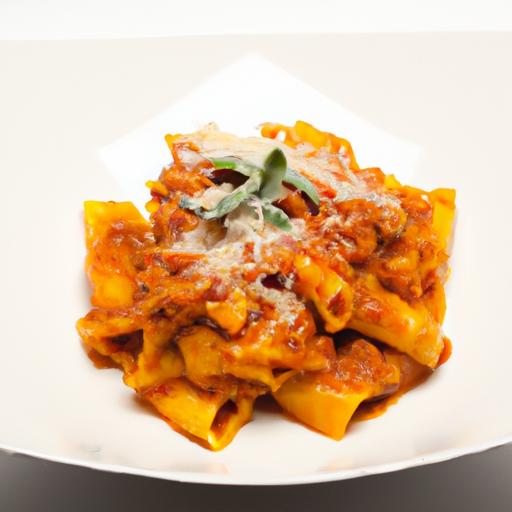

Few culinary treasures evoke the heart and hearth of Italy quite like a slow-simmered ragu sauce. This deeply flavorful, hearty blend of meat, tomatoes, and aromatic herbs transforms simple pasta into a soul-satisfying masterpiece, embodying generations of tradition in every luscious spoonful. But behind its rustic charm lies a delicate balance of technique,patience,and secret touches that elevate ordinary ingredients into Italy’s richest pasta classic. In this article, we’ll unravel the mysteries and time-honored methods that turn humble ragu from a humble stew into a symphony of flavors-inviting you to bring the authentic taste of Italian heritage right to your kitchen table.
Ragu Sauce Secrets: Crafting Italy’s Richest Pasta Classic
Ragu sauce secrets unveil a journey into the heart of Italian culinary tradition, where choice cuts of meat and slow simmering transform simple ingredients into a deeply flavorful masterpiece. Every simmer bubbles with layers of savory aromatics and the tender embrace of fresh herbs, creating a sauce that resonates with the soul of Italy. This dish is more than just a sauce-it’s a celebration of patience, balance, and texture that elevates any pasta to an unforgettable experience.
Prep and Cook Time
- readiness: 20 minutes
- Simmering: 3 to 4 hours
- Total Time: 3 hours 20 minutes to 4 hours 20 minutes
Yield
Serves 6 generously
Difficulty Level
Medium – perfect for adventurous home cooks ready to embrace slow cooking and flavor layering
Ingredients
- 2 tbsp olive oil, extra virgin
- 4 oz pancetta, finely diced
- 1 large onion, finely chopped
- 2 medium carrots, finely diced
- 2 celery stalks, finely diced
- 1 lb ground beef (preferably chuck), coarsely ground
- ½ lb ground pork, coarsely ground
- 1 cup whole milk, room temperature
- 1 cup dry white wine
- 28 oz canned San Marzano tomatoes, crushed by hand
- 2 tbsp tomato paste
- 2 garlic cloves, minced
- 2 fresh rosemary sprigs
- 3 fresh thyme sprigs
- 1 bay leaf
- Salt and freshly ground black pepper, to taste
- Freshly grated Parmigiano-Reggiano, for serving
Instructions
- Heat the olive oil in a large heavy-bottomed pot over medium heat. Add the pancetta and sauté until it renders its fat and becomes crispy, about 5 minutes.
- Add the finely chopped onion, carrots, and celery (the soffritto) to the pot. Sauté,stirring frequently,until the vegetables are soft and golden,about 8-10 minutes-this builds the foundational flavor.
- Incorporate the ground beef and pork into the mixture. Brown the meat gently,breaking it apart with a wooden spoon; cook until no pink remains and it is indeed evenly seared,about 10 minutes. Avoid rushing this step to develop rich caramelization.
- Pour in the milk, stirring constantly. Allow it to simmer gently until it has mostly evaporated; this tenderizes the meat and mellows acidity for a smooth finish.
- Deglaze the pot with white wine, scraping up any browned bits from the bottom. Let the wine reduce by half-this intensifies the savory backing notes of the ragu.
- Add the crushed San Marzano tomatoes, tomato paste, minced garlic, rosemary, thyme, and bay leaf. Stir to combine thoroughly and season with salt and pepper to taste.
- Reduce the heat to low and let the sauce gently simmer uncovered for 3 to 4 hours, stirring occasionally. Slow simmering breaks down the meat to silky, tender strands and melds all flavors into a harmonious whole.
- Check seasoning before serving,adjusting salt and pepper as needed. Remove sprigs and bay leaf.
tips for Success
- Patience is your secret weapon-resist the urge to rush the simmering process; flavor deepens with time.
- Use whole milk instead of cream for a lighter texture that still enriches the sauce beautifully.
- For a conventional touch, add a splash of Italian white wine like Pinot Grigio or Verdicchio.
- Make this sauce a day ahead to let flavors meld; reheat gently with a splash of water or stock.
- Swap pancetta for guanciale if you want an authentic, sharper pork undertone.
serving Suggestions
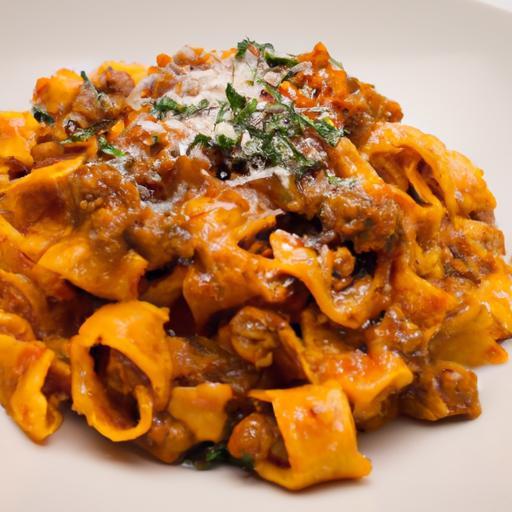
Serve your ragu sauce spooned lavishly over freshly cooked pappardelle, tagliatelle, or fettuccine, allowing the wide noodles to cradle the rich meat sauce. Garnish generously with freshly grated Parmigiano-Reggiano and a sprinkle of extra fresh thyme or basil leaves. A drizzle of extra virgin olive oil atop just before serving will add a gorgeous sheen and elevate the richness.
Complement the dish with a simple arugula salad dressed in lemon and olive oil and a crusty loaf of rustic Italian bread for mopping up every last drop.

| Nutritional Data (per serving) | Amount |
|---|---|
| Calories | 420 kcal |
| Protein | 32 g |
| Carbohydrates | 10 g |
| Fat | 27 g |
Unlock the authentic taste and texture of Italy’s treasured ragu with these secrets, transforming your kitchen into a slow-cooked symphony of vibrant herbs, sumptuous meats, and perfectly patient technique.For more Italian Classics, explore our collection of classic pasta recipes.
Q&A
Q&A: Ragu Sauce Secrets – Crafting Italy’s Richest Pasta Classic
Q1: What makes Ragu sauce stand out among Italy’s many pasta sauces?
A1: Ragu is the culinary embodiment of patience and passion. Unlike quick tomato sauces, Ragu simmers slowly, melding rich meats, aromatic vegetables, and wine into a deep, hearty symphony of flavors. It’s less about flashy ingredients and more about the alchemy of time and tradition,creating a sauce that’s both comforting and profoundly complex.
Q2: Can you share the foundational ingredients that define an authentic Ragu?
A2: At its heart, an authentic Ragu features a soffritto base-finely chopped onions, carrots, and celery-sautéed gently in olive oil or butter. Ground meats, often a blend of beef, pork, and sometimes veal, bring texture and depth. Tomatoes (fresh or concentrated), a splash of robust red or white wine, and slow-simmered broth glue everything together. A touch of milk or cream softens acidity, while herbs like bay leaves, thyme, or rosemary add subtle aromatic layers.
Q3: How important is the meat selection in crafting a classic Ragu?
A3: The soul of Ragu lies in its meat. Combining beef’s robustness with pork’s sweetness creates a balance rarely matched in other sauces. Veal adds tenderness, rounding out the texture. Some regional variations even call for pancetta or sausage to inject savory richness. The key is quality and a proper grind: neither too fine nor too chunky, ensuring a satisfying mouthfeel after hours of slow cooking.
Q4: Why is slow cooking essential for Ragu?
A4: Slow cooking is where magic happens. It allows collagen in the meat to break down, transforming the sauce into a luscious velvety tapestry. the flavors meld gradually, softening acidity and deepening savory notes. Rushing this process risks a harsh, uneven taste. traditional Ragu recipes often recommend simmering for two to four hours, sometimes longer, to coax out that signature richness.
Q5: What role does wine play in the sauce? Should it be red or white?
A5: Wine is the soulful spirit in Ragu; it lifts and brightens the sauce, cutting through the meat’s richness and adding a nuanced fruitiness. Both red and white wines are acceptable, varying by region and family tradition. Reds lend earthier, bolder notes, while whites contribute crispness and subtle sweetness. The key is to use a dry, good-quality wine you would enjoy drinking, then let it gently reduce until integrated.
Q6: Is adding milk or cream a secret moast chefs keep? why is it included?
A6: The addition of milk or cream might seem surprising but is an old-school Italian secret. It tames the acidity of tomatoes and balances the robustness of meat. This slip of dairy softens and enriches the sauce, giving Ragu its characteristic silkiness and slightly sweet finish.Small quantities are added early in the simmering process to meld fully with other ingredients.
Q7: How does one achieve the perfect balance of tomato and meat in a Ragu?
A7: Balance is an art. Tomatoes should complement, not overpower, the meat. Many classic Ragus use just a modest amount of tomato paste or peeled tomatoes rather than heavy tomato sauces. This ensures that the meat remains the spotlight. Tasting as you go, adjusting for sweetness or acidity with a pinch of sugar or a splash more broth, helps maintain that delicate harmony.
Q8: Are there regional variations of Ragu, and how do they effect the recipe?
A8: Absolutely! In Bologna, Ragù alla Bolognese is a world-famous version, featuring leaner meats and a balance of wine, milk, and tomatoes. Naples offers a richer, tomato-heavy Ragu Napoletano, slow-cooked with large meat chunks.Each locale adapts the sauce to local ingredients and palate preferences-from the choice of meat to herbs and simmering times-showcasing Italy’s diverse culinary identity.
Q9: What pasta pairs best with Ragu sauce?
A9: The sauce’s thick, hearty nature demands robust pasta shapes capable of holding onto every morsel. Classic pairings include tagliatelle, pappardelle, or broad egg noodles, whose wide surfaces capture the meaty sauce beautifully. Some regions serve Ragu with sturdy shapes like rigatoni or mezzi paccheri. The right pasta acts as a canvas,elevating Ragu’s richness without getting lost.
Q10: Any final tips for home cooks aiming to master Ragu?
A10: Patience and attention to detail are your best allies. Take the time to finely chop your soffritto, brown meats carefully to build flavor, and stir occasionally during slow simmering to prevent sticking. Use quality ingredients and don’t be afraid of gentle adjustments-taste and tweak. Remember, Ragu is as much about love and ritual as it is about technique. Embrace the process, and you’ll unlock Italy’s richest pasta classic in your kitchen.
In Retrospect
As the final simmer settles and the aroma of your homemade ragu fills the kitchen, you’ll realise that crafting Italy’s richest pasta classic is more than just a recipe-it’s a ritual steeped in tradition, patience, and a touch of love. From selecting the perfect cuts of meat to coaxing depth from humble ingredients, the true secret lies in embracing the slow, purposeful process that transforms simple components into a symphony of flavors. Weather you’re a seasoned chef or an eager home cook, this guide to Ragu Sauce invites you to savor not just the taste, but the story behind every luscious, velvety bite. So next time you twirl your pasta, remember: the richest ragu is born from time, technique, and a passion that turns cooking into an art form. Buon appetito!